

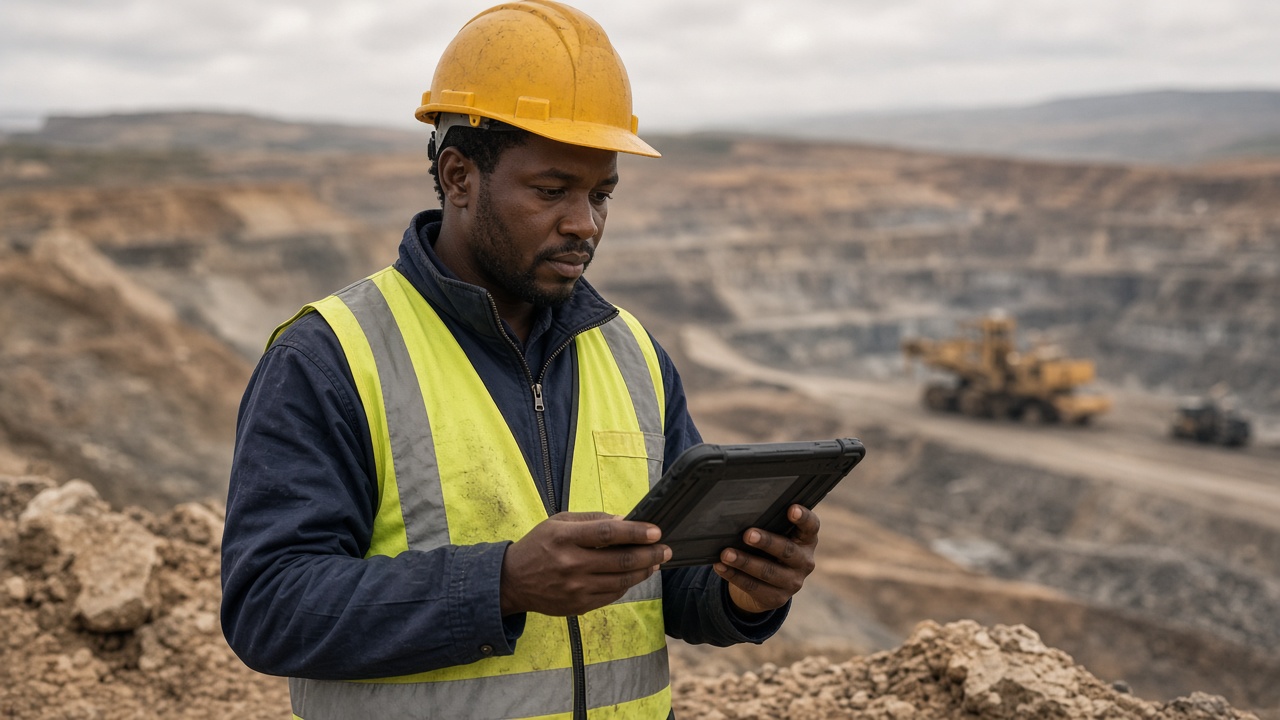
When you picture a tech job, you probably think of a Sandton office or a fintech start-up, not a coal mine in Mpumalanga or a fuel plant in Secunda. One of our readers, who works as a techie in the industry, wants to change that picture:
“Oil and Gas, and Mining, are also quite in on tech and, since I work there as one of the techies, I can tell you confidently that techies are needed in the petroleum industry, and in the mining industry too.”
We looked into it, and the research backs them up.
Mining is going digital, and it’s short of people who can do the work
PwC’s SA Mine 2025 report says AI, predictive analytics and automation now play “central roles” in how South African miners operate. These tools help them plan production, cut downtime and improve safety. PwC tracked 19 digitalisation and AI initiatives across the sector: 8 were already achieved, 9 were in progress and 2 were ongoing. Those initiatives include AI-powered maintenance systems, digital planning tools and ERP integration. The report also tracked 11 maintenance initiatives built around digital asset management.
The skills gap is real. A global benchmarking report on mining modernisation published by the Minerals Council South Africa found that 62% of firms cite a shortage of digital skills. It also found that only 18% of engineers are trained in AI, and that fewer than 25% of mines use AI or digital twins. For job seekers, that gap means opportunity.
The Minerals Council’s own 2025 Integrated Annual Review calls modernisation “the long-term lever” for the industry’s competitiveness. It mapped about R1.97 billion in research, development and innovation spending in 2025. The Council also runs a Mining Skills 4.0 programme to reskill and upskill workers for the Fourth Industrial Revolution (4IR). It is also building a GIS platform to support decisions with real-time data.
What “tech in mining” looks like in practice
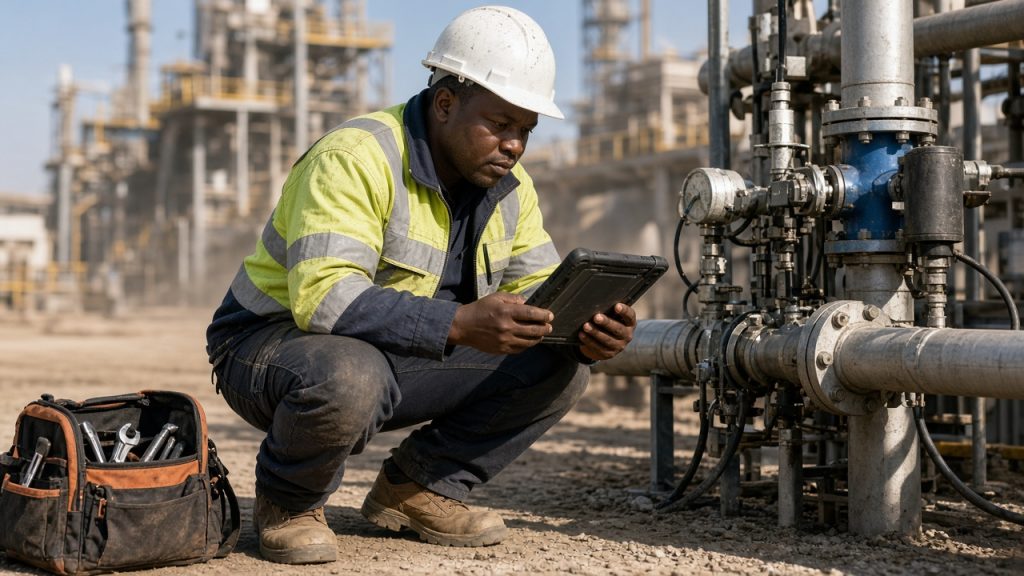
- Digital twins and operations hubs: Exxaro’s Belfast coal mine was built as South Africa’s first mine with a digital twin, a digital copy of the mine. Combined with an integrated operations hub, it lets teams manage equipment and operations remotely. During construction, drone imagery was used to check the work against the design.
- Predictive maintenance: at Anglo American’s Amandelbult platinum mine, a remote monitoring team using a digital twin spotted a fault in a compressor cooler that on-site alarms had missed. The supplier estimated that catching it early saved roughly $2 million.
- Underground R&D: Sibanye-Stillwater is involved in DigiMine at Wits. This mock mine with its own control room is used to bring digital technology underground and keep workers further from danger.
Oil, gas and fuels: connected plants and control rooms
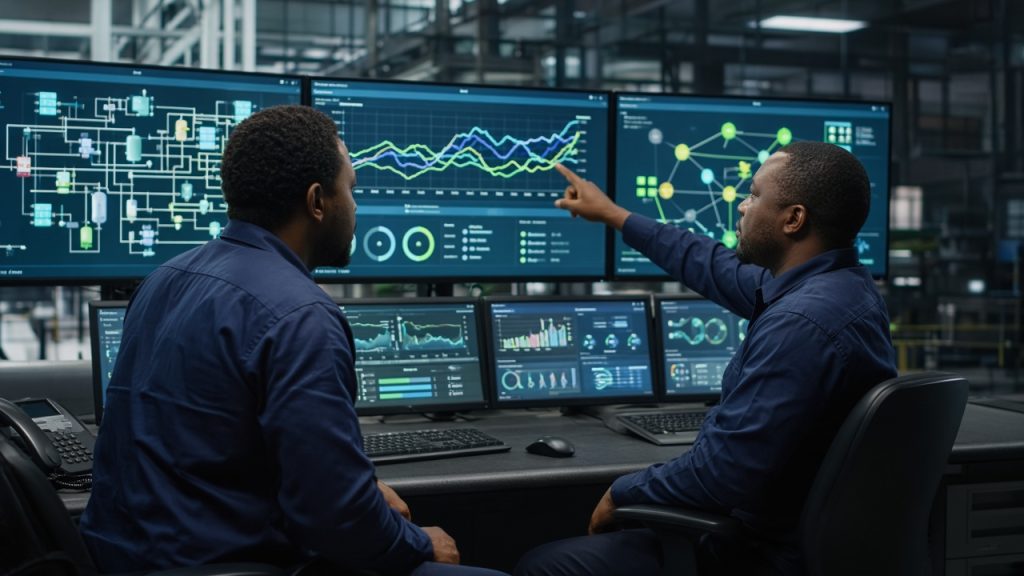
The petroleum and synthetic fuels side tells the same story. In June 2025, Vodacom Business deployed a Mobile Private Network at Sasol’s Secunda facility. Sasol called it part of its “digitalisation journey”. The network connects people, equipment and assets for real-time remote monitoring, safety and asset management.
Also at Secunda, a remote monitoring project for electrostatic precipitators changed how faults are found. Morning checks used to need 48 field controllers walking the plant. Now one person can monitor it from the control room, and problems are picked up within five minutes instead of five hours.
Offshore, TotalEnergies has applied for a production right for Block 11B/12B, which contains the Luiperd and Brulpadda gas discoveries. Any development there is still uncertain, but projects like this need instrumentation, control and data skills.
In-demand roles to aim for
The MQA’s scarce skills list for the mining and minerals sector includes several tech-heavy occupations:
- Control engineers and control engineering technologists
- Instrumentation engineers and instrumentation technologists
- Electronics engineering technologists
- Mine surveyors (more and more work involves GIS, drones and 3D modelling)
- Geostatisticians and statisticians (the data people)
- Physical asset managers
Going by the projects above, also watch for these roles:
- Instrument technicians and mechanicians
- SCADA and automation specialists
- Data analysts and scientists
- OT/ICS cybersecurity specialists
- Network and telecoms technicians
- SAP and ERP consultants
- Drone operators
How to get in
- Artisans: instrumentation usually means N-courses at a TVET college, workplace training and then a trade test. The MQA funds learnerships and artisan programmes, and the Minerals Council’s employee fact sheet points to bursaries and training aimed at young people.
- Graduates: look out for mining-house bursaries, graduate programmes and engineer-in-training posts in electrical, control and instrumentation, or data.
- IT pros moving across: learn how operational technology (OT) works, meaning PLCs, SCADA and industrial networks. Industrial cybersecurity certifications such as ISA/IEC 62443 or GICSP are worth a look, and cloud and data certifications also carry over well. If you already know SAP, add plant maintenance (PM) or asset-management experience.
- Everyone: safety culture matters. Mention any site, plant or shift experience on your CV.
A live example on Hired & Hire
Tech-adjacent industrial jobs aren’t limited to mines. Right now Hired & Hire lists an Instrument Technician C3 role at PPC Ltd in Dwaalboom, Limpopo. PPC is a cement manufacturer, so this is heavy-industry work. The skills it calls for, keeping process instrumentation and control systems running, are the same ones mines and fuel plants need. Applications close on 2 November 2026.
Where to look
- Company career pages: Sasol, Anglo American, Sibanye-Stillwater, Exxaro, Harmony and other mining houses
- MQA and company bursary and learnership calls
- hiredandhire.com, where we add new jobs every day, including technical and industrial roles
Our reader is right: the hard hat and the laptop now go together. If you’re a techie, mining and oil & gas are worth a serious look.
👉 Browse the latest jobs at hiredandhire.com, and share this article with a techie who’s job hunting. 🙏
Sources
- PwC, SA Mine 2025: https://www.pwc.co.za/en/assets/pdf/sa-mine-2025.pdf
- Minerals Council SA, Global Benchmarking Report: Mining Modernisation: https://www.mineralscouncil.org.za/component/jdownloads/?catid=159&id=2760&m=0&task=download.send
- Minerals Council SA, 2025 Integrated Annual Review: https://www.mineralscouncil.org.za/reports/2025-integrated-annual-review/
- Minerals Council SA, People-Centred Modernisation: https://www.mineralscouncil.org.za/work/safety/modernisation
- Minerals Council SA, #MiningMatters to Employees 2025 Fact Sheet: https://www.mineralscouncil.org.za/component/jdownloads/?catid=3&id=2592&m=0&task=download.send
- MQA, Scarce Skills: https://mqa.org.za/scarce-skills/
- Mining Weekly, Belfast first mine to have digital twin: https://www.miningweekly.com/article/belfast-first-mine-to-have-digital-twin-2019-11-27
- Mine (NRI Digital), Wabtec’s digital twin: https://mine.nridigital.com/mine_jul20/mining_digital_twin
- Mining Review, Technology key to the future of the mining sector in SA: https://www.miningreview.com/gold/technology-key-to-the-future-of-the-mining-sector-in-south-africa/
- Sasol, Vodacom Business and Sasol partner to deliver MPN solution (20 June 2025): https://www.sasol.com/media-centre/media-releases/vodacom-business-and-sasol-partner-to-deliver-mpn-solution
- Industrial Compliance, Plant to control room visibility (29 May 2025): https://industrial-compliance.co.uk/plant-to-control-room-visibility/
- Natural Gas World, TotalEnergies to progress South African block to production phase: https://www.naturalgasworld.com/totalenergies-to-progress-south-african-block-to-production-phase-100750
